My 20 Year Old Secret - Part 1
Jul 10, 2026 - ⧖ 9.0 minI've been keeping something to myself for over 20 years. Time really does fly fast when you're having fun.
How it started
I was always a curious boy, and I was determined to find a way to 'fix' this problem. This was before YouTube - and before my parents would let me spend too much time on the internet anyways - so I did what any other 11-year-old boy would do. I called tech support!
There's always a loophole
My curiosity with the family computer led to me (often) breaking the computer. My parents were not the computer literate types, so I knew that fixing it would also be an adventure I'd have to trek on my own. Through the many trials and errors (mostly errors) of my curiosity, I discovered that you could call tech support.... for free! It was even a toll-free number, so the call itself would not cost our family any money. I must admit that I gave myself a crash course in networking this way. I would often purposefully break a network configuration on the computer, just so I could call AT&T tech support to see what process they would use to help me fix the problem.
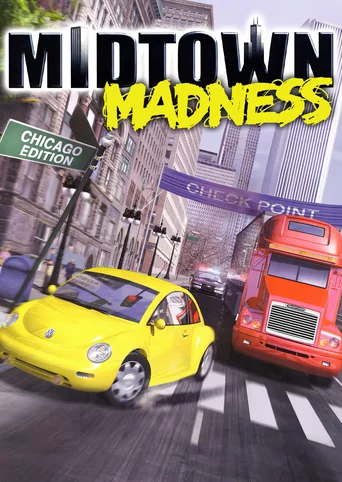
I soon discovered that you could also call Microsoft support and they would also provide you with free technical support, so long as the issue was directly related to the installation of Windows. So, being the reckless curious kid that I was, I would format and reload the family Windows computer, and open Microsoft support cases to help me "fix" problems that would come up. (For those that may not know, format and reload means to literally delete the entire contents of the hard drive of the computer, and start fresh.) Don't ask me why this worked - but on one such occasion I was able to convince Microsoft to open a support case for me because after re-installing Windows, the smoke in Midtown Madness would cause my computer to stutter significantly.
At this point you must be wondering how in the world Microsoft support could let such a thing happen. More than that, why would they create a support request for an 11-year-old boy? Well, it turns out that my 11-year-old voice sounded more like a ma'am than a man. I rolled with it, because I felt it was the least I could do (to put up with being mistaken for a lady) for the low, low price of free. I'm fairly certain that most tech reps were able to figure out that I was actually a young kid looking for a solution to why his game had low FPS. Either way, the reps were always very gracious with me and taught me many of the skills that I would use later in life in my tech career.
Unlike other support cases that would end with a positive solution, this one would end with the disappointment that my GeForce2 MX 400 simply didn't have the "juice" to play Midtown Madness with a smooth framerate. Our family did not grow up with money and buying a new graphics card so that I could play Midtown Madness without stutters was not in the cards. I spent the next few years saving up birthday, Christmas and miscellaneous "Work with dad" money to buy a new graphics card.
Best in class
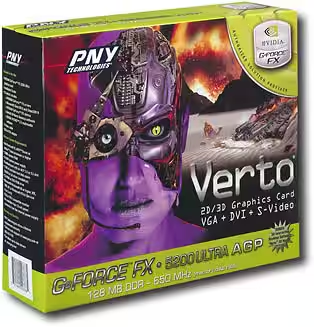
I bet you know how the rest of this story is going to go... Anyone who knows anything about Nvidia naming conventions, even to this day, can tell you that "2" in the naming scheme signifies the lowest tier. The word "Ultra" was not going to give the Ultra performance I was hoping for.
Sure enough, while the entire Midtown Madness game did indeed render significantly faster with the high settings enabled, it would still not render the smoke without some stutter. I was devastated. Or at least, whatever the equivalent pre-teen expression may be. My brain could not understand why this smoke effect was still too difficult for my ultra graphics card. I soon realized I still had one thing left to try. Call tech support!
Blessing in disguise
I called PNY tech support to explain my issues with how my best in class Ultra rated card may be defective. On the other end of the phone was a very friendly support agent named Will. He was very patient in checking all the computer settings, drivers, DirectX Diag and everything else he could think of. I remember that the troubleshooting questions he would ask me about the issue were nuanced. I could tell he understood way more about real-time graphics and computers than I did.
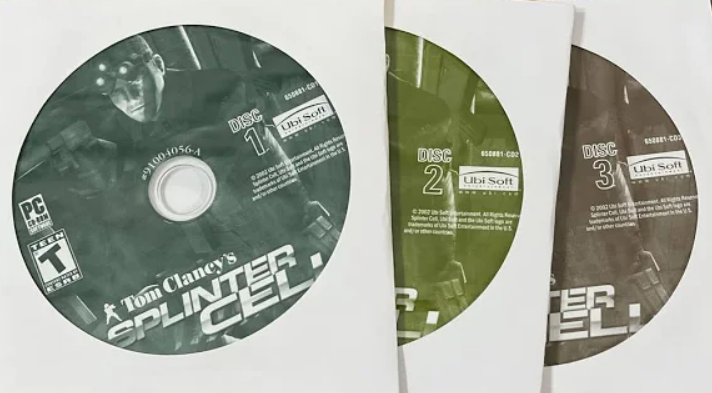
That's when he asked me if I tried to play the game that was bundled with the graphics card. Truthfully, I didn't pay any mind to the discs that came with the graphics card because I was so focused on my smoke dreams. He told me that he could tell I was really passionate about games and graphics, and that I should give the bundled game a try as it was known to have the best real-time graphics of any game he'd seen. So, I inserted the discs and installed it. That's when I realized there was way more to next-gen graphics than just smoke. I had way larger performance problems to obsess over.
Dammit Fisher, you ruined my frame rate!
Splinter Cell 1 was (and to this day, is) a graphics marvel. I had no idea that my computer could (attempt to) render real-time shadows, and I was obsessed! How in the world can the computer render not just lighting and shadows in real-time, but shadows in-the-air (light beams)? I will happily admit to you that I've never been a "normal" kid, in any sense of the word. My first run through of the game was spent not so much on the missions Lambert had for me, but instead zooming in on the details of the game, playing with the real-time "sheet" physics of the game's soft-body simulation, and staring intently at the real-time shadows and light beams of the game. How could it be that my FX 5200 Ultra could render such a marvel in near-real-time? I say near-real-time because it of course ran terribly.... but that made my brain wonder all the more about the magic that makes all of this happen.
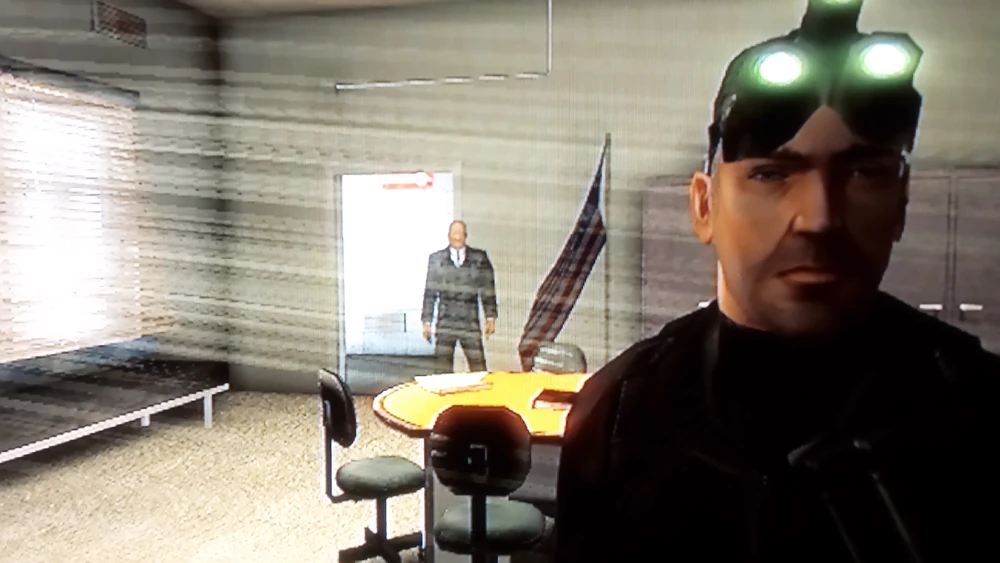
Ubisoft would go on to release Splinter Cell Pandora Tomorrow, and I would again spend countless hours "playing" the game and wondering how this game was producing the stunning images I was seeing. For me, Pandora Tomorrow changed my childhood as Ubisoft decided to release the Unreal Editor for the multiplayer portion of the game. This meant that for the first time, I could explore exactly how the levels were made, and build my own - and that's exactly what I spent the next few years doing. I spent hundreds (likely thousands?) of hours deconstructing each level, and making several new levels of my own. I'm fairly certain that I knew this Unreal Editor and each level better than the Ubisoft developers themselves.
When Splinter Cell Chaos Theory came out, you can imagine the excitement I had playing through the single-player missions. I was so proud that my game, the one I've spent thousands of hours loving, became critically acclaimed and won game of the year. Ubisoft also released an Unreal Editor for the Chaos Theory multiplayer version of the game. I would again go on to spend countless hours developing content inside of that editor.
If not for Will and my grossly underpowered GeForce FX 5200 Ultra, I can confidently say that my life would not be what it is today. Will from PNY went on to become a mentor and great friend over the many years to come.
It's not a stretch to say that Splinter Cell, and by extension, the Unreal Engine was a core part of my teenage years. My love for graphics and curiosity for the "how" of game development far exceeded my time playing the actual game, let alone the ability to be good at any particular game. It taught me how to think about object-oriented programming, quality vs fps quantity, performance budgets, all the while thinking creatively about how to make content that can be fun for other people to play.
Do you believe in miracles?
Making content for the multiplayer part of the game was fun, but my curious mind was obsessed with how Ubisoft could extend the Unreal Engine 2 codebase to produce the stunning visuals of the Chaos Theory single-player game. You mean my beloved Unreal Engine 2 could be extended to produce real-time normal mapped materials, soft shadows, HDR, and integrate the Havok physics engine?
I dreamed about those single-player development tools the way other kids dreamed about sports cars. The multiplayer editors were incredible gifts, but they were also a window into a locked room. Every time I loaded a Chaos Theory single-player mission, I could see the extended engine at work. The soft shadows crawling across the level. The HDR bloom spilling out of a hallway light. I knew that somewhere at Ubisoft Montreal, there was a version of my beloved Unreal Editor that could author all of it. I would have traded every level I ever built for one afternoon with that toolset.
It would take a miracle to get access to those development tools.